In our Invisible City, moving data is half the battle. The other half is putting it somewhere. Depending on who you ask—the engineers, the analysts, or the city planners—they’ll give you different answers on where the data should live.
Let’s walk through the three main types of “storage facilities” in our city infrastructure, with Conductor Mickey as our guide.
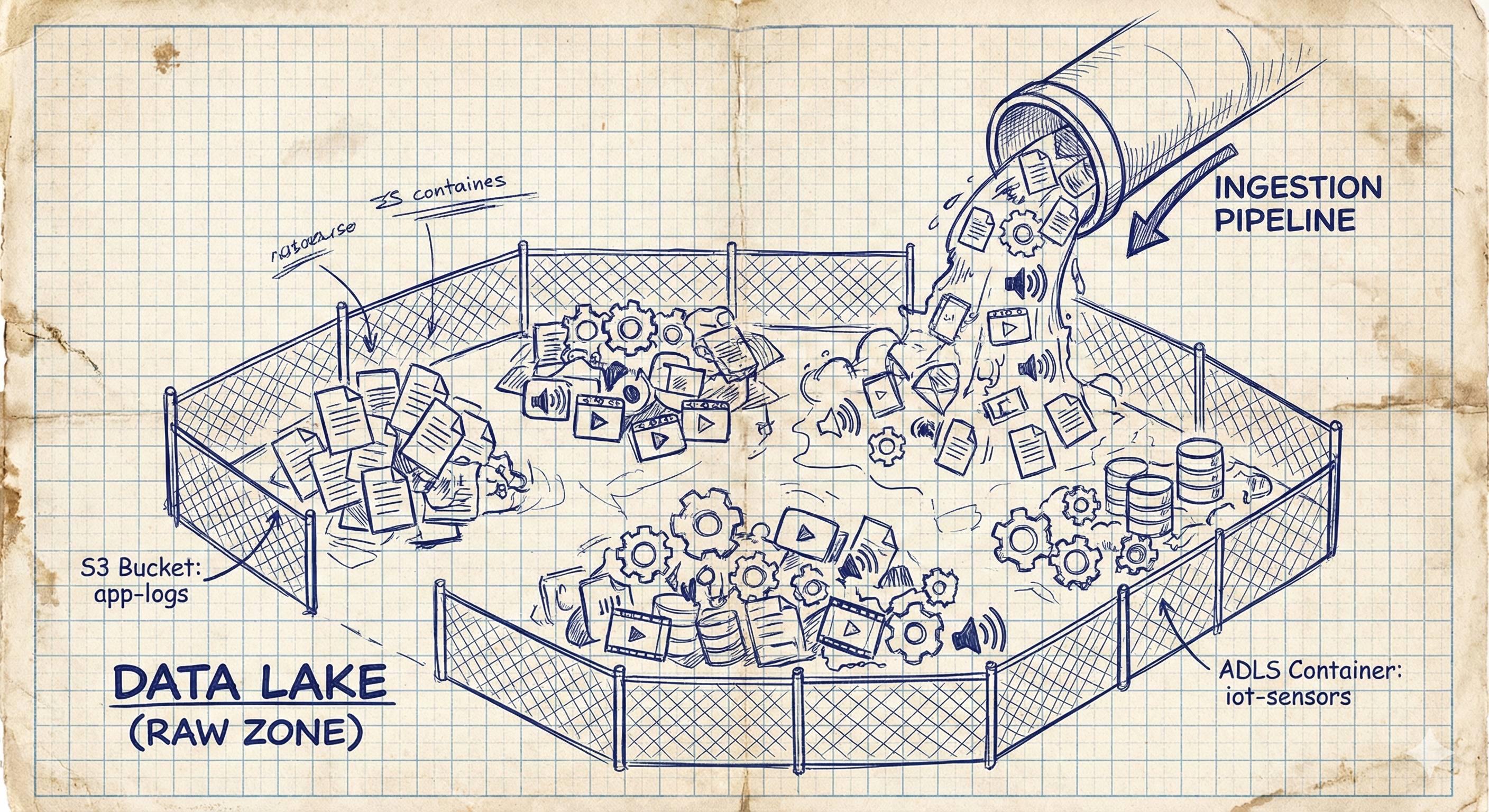
1. The Data Lake: The Massive Storage Yard
The Analogy: Imagine a giant, sprawling industrial yard at the edge of the city. It’s cheap land where we throw everything. Old train seats, crates of unsorted tickets, literal piles of raw iron, and even some lost luggage.
- The Reality: A Data Lake stores data in its raw format (JSON, CSV, Images). It’s optimized for low-cost storage of massive volumes.
- The Problem: If you don’t label your crates, the yard becomes a “Data Swamp.” * The Tools: AWS S3, Azure Data Lake (ADLS) Gen2, Google Cloud Storage (GCS).
2. The Data Warehouse: The Grand Central Terminal
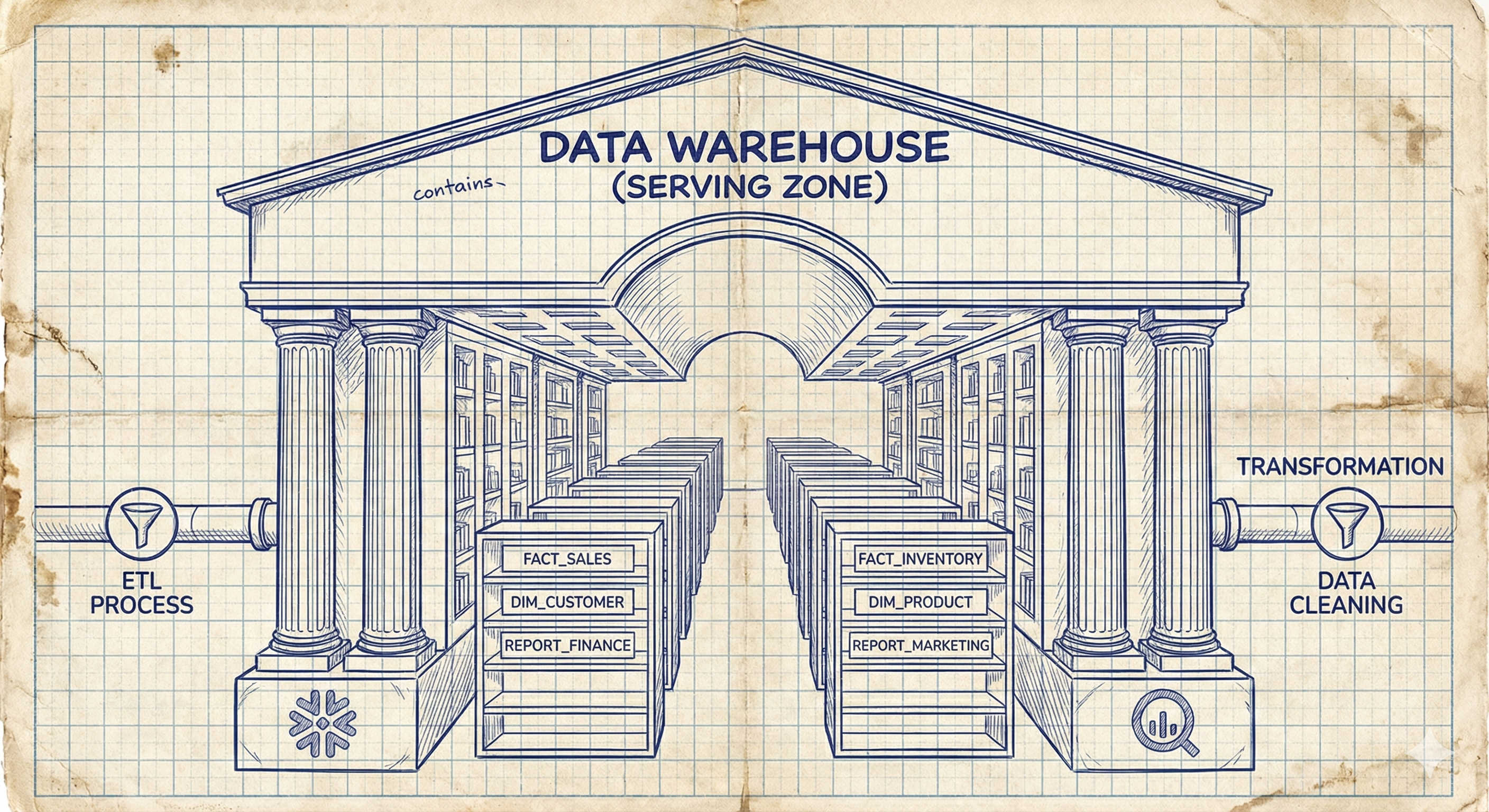
The Analogy: This is the crown jewel of the city center. It’s a pristine, marble-floored station where every train is on a numbered platform. Everything is perfectly filed and ready for passengers (business users).
- The Reality: Stores highly structured, cleaned, and “Business Ready” data. Optimized for SQL queries.
- The Problem: It’s expensive real estate. You can’t just throw raw iron here; it has to be refined first.
- The Tools: Snowflake, Google BigQuery, Amazon Redshift.
3. The Data Lakehouse: The High-Tech Hybrid Hub
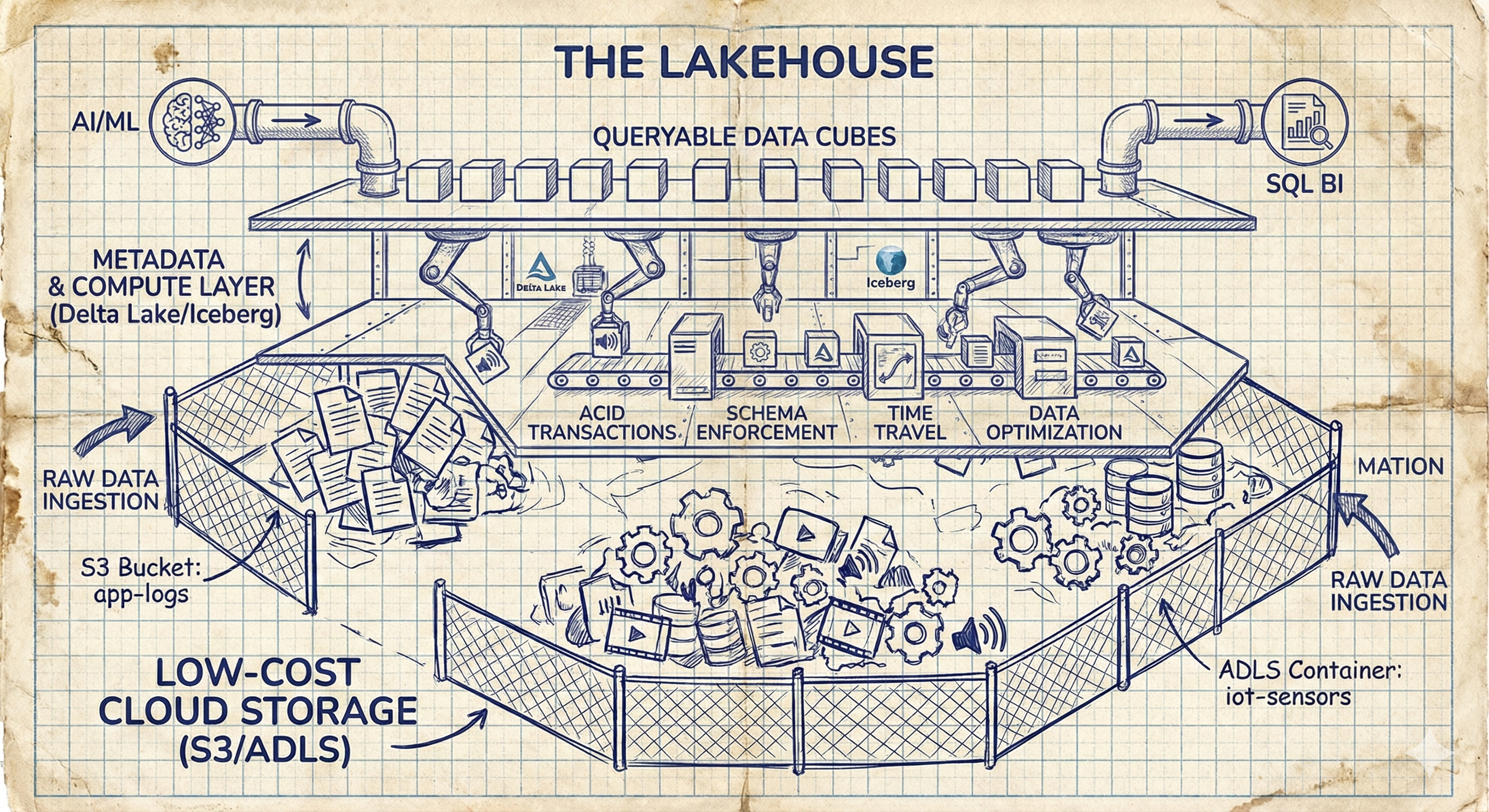
The Analogy: This is the newest project in the Invisible City. It’s a facility that has the massive, cheap space of a Storage Yard but is equipped with the high-speed sorting machines of a Terminal.
- The Reality: A Lakehouse gives you the best of both worlds. It stores data cheaply in open formats (like Parquet) but lets you query it like a Warehouse.
- The Tools: Databricks, Delta Lake, Apache Iceberg, Microsoft Fabric.
Comparison at a Glance
| Feature | Data Lake (The Yard) | Data Warehouse (The Terminal) | Data Lakehouse (The Hub) |
|---|---|---|---|
| Data Type | Anything (Raw) | Structured (Cleaned) | Both |
| Cost | Low (Cheap storage) | High (Expensive compute) | Balanced |
| Speed | Slow to find things | Lightning fast | Very fast |
| Primary Users | Data Scientists | Business Analysts | Everyone |
Conclusion: Mickey’s Advice
In our Invisible City, we usually need all three. We catch the raw data in the Lake, organize the most important parts in the Warehouse, and use a Lakehouse to bridge the gap between “messy” and “perfect.”
Which storage facility are you currently digging tunnels for? Let me know in the comments!