In our Invisible City, if the Data Lake is the storage yard, then Parquet is the high-tech, space-saving shipping container we use to pack the goods.
Most people are used to CSV files—they are like old-fashioned wooden crates. They work, but they are heavy, take up too much space, and are slow to move. Parquet is the “Flat-Pack” futuristic alternative.
The Vertical Train: Why Data Engineers Love Parquet
Imagine a subway train full of passengers. Each passenger has a Name, an Age, and a Destination.
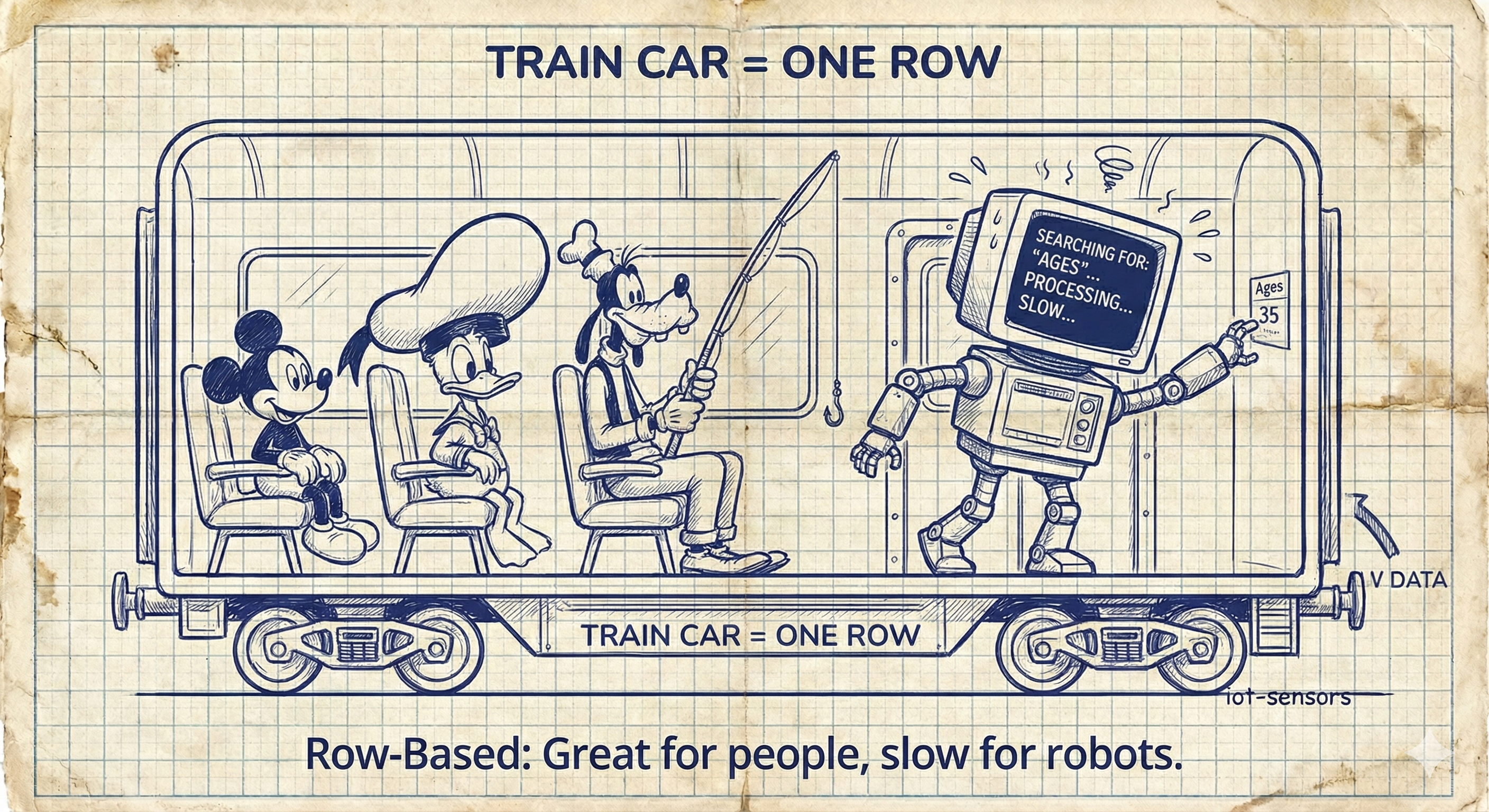
The Old Way: The Row-Based Commute (CSV)
In a traditional file, like a CSV, the data is stored row by row. It’s like a train where every seat has one person. If you want to count how many passengers are going to “Grand Central,” the conductor (the computer) has to walk through the entire train, looking at every person’s name and age just to get to their destination.
It’s a lot of wasted walking!
The Parquet Way: The Columnar Express
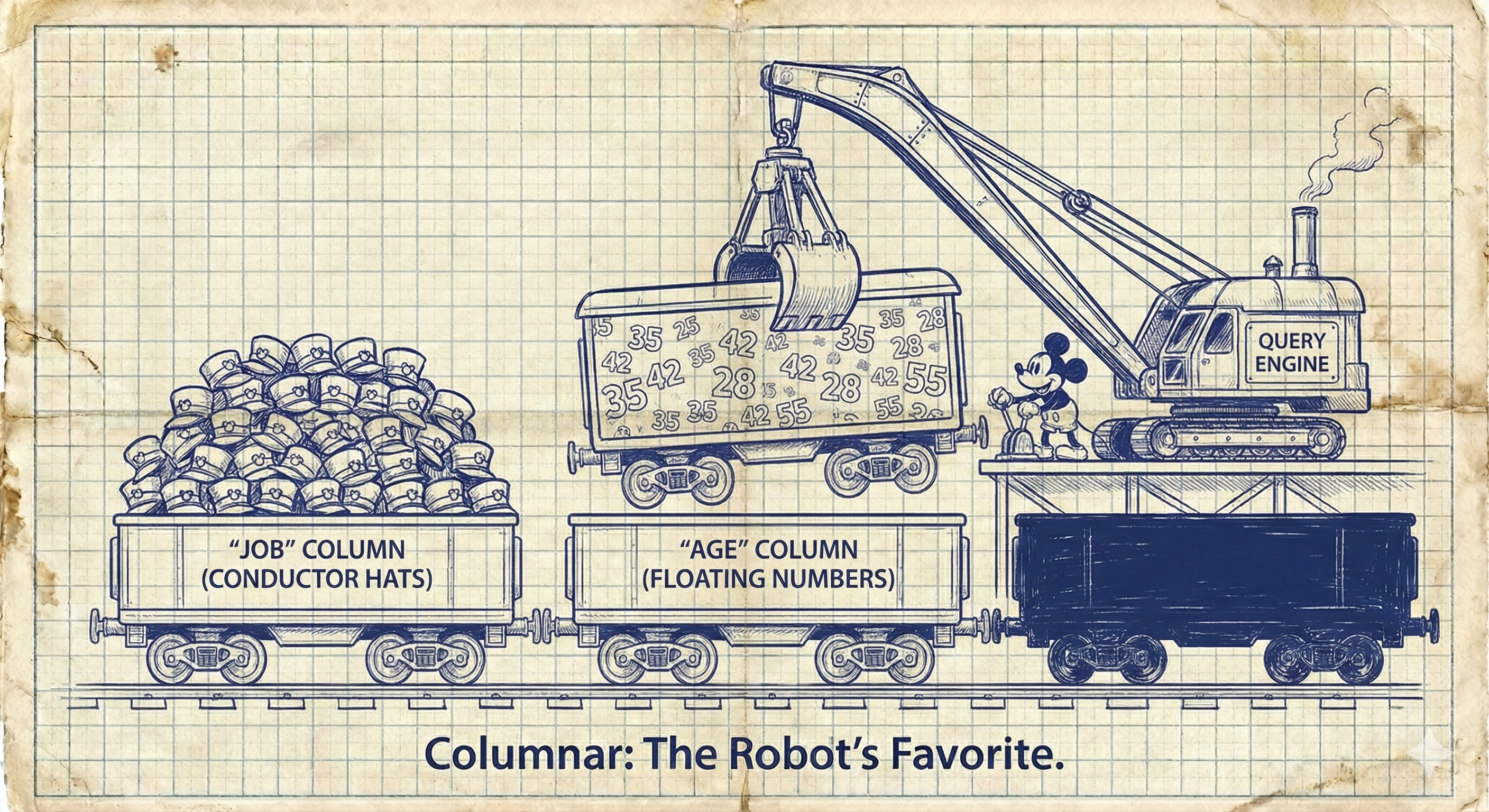
Parquet flips the train on its side. It groups all the Names together in one car, all the Ages in the second car, and all the Destinations in the third car.
If Conductor Mickey needs to know the destinations, he doesn’t walk the whole train. He just unhooks the “Destination Car,” looks at it, and ignores the rest of the train entirely.
Why Mickey Switched to Parquet
1. The “Magic Squeeze” (Compression)
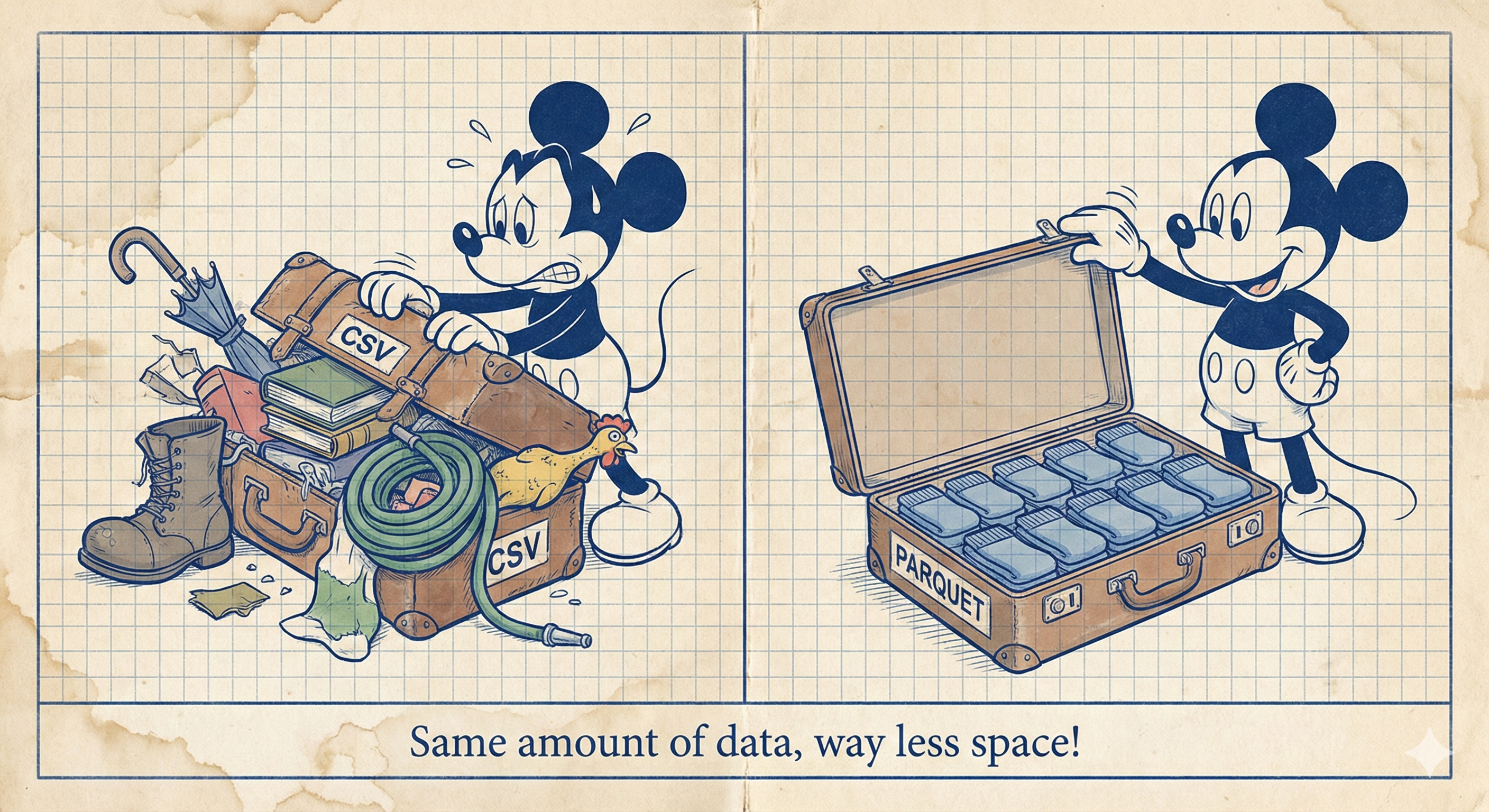
Because all the data in one “car” (column) is the same type (e.g., all numbers or all city names), it’s very easy to compress.
- The Analogy: It’s like packing a suitcase with only socks. You can squish them down much tighter than a suitcase full of mixed shoes, hats, and coats.
- The Result: Parquet files take up 60-80% less space than CSVs. Mickey’s storage yard just got a lot bigger!
2. The “Short Cut” (Projection Pushdown)
As we mentioned, if you only need 2 columns out of 100, Parquet only reads those 2.
- The Result: Your queries run lightning fast because the computer isn’t “walking” through data it doesn’t need.

3. The “Filter Shield” (Predicate Pushdown)
Parquet files store “Min/Max” values for every block of data. If Mickey is looking for passengers aged 20-30, and a specific block says “Min Age: 40,” Mickey doesn’t even open that crate. He just skips it!
Where do we use Parquet?
In the modern city, almost every high-speed line uses Parquet:
- Spark: It’s the default language for Mickey’s big engines.
- AWS S3 / Azure Data Lake: It’s how we store data in the “Yard” to keep costs low.
- Delta Lake: This “Lakehouse” we talked about? It’s basically Parquet files with a fancy brain on top.
Conclusion: Don’t be a “CSV Commuter”
If you’re still moving data in CSV crates, your subway is going to be slow and expensive. Switching to Parquet is like upgrading from a horse and buggy to a high-speed maglev train.